
Best Clean Technology Ideas for Student Research
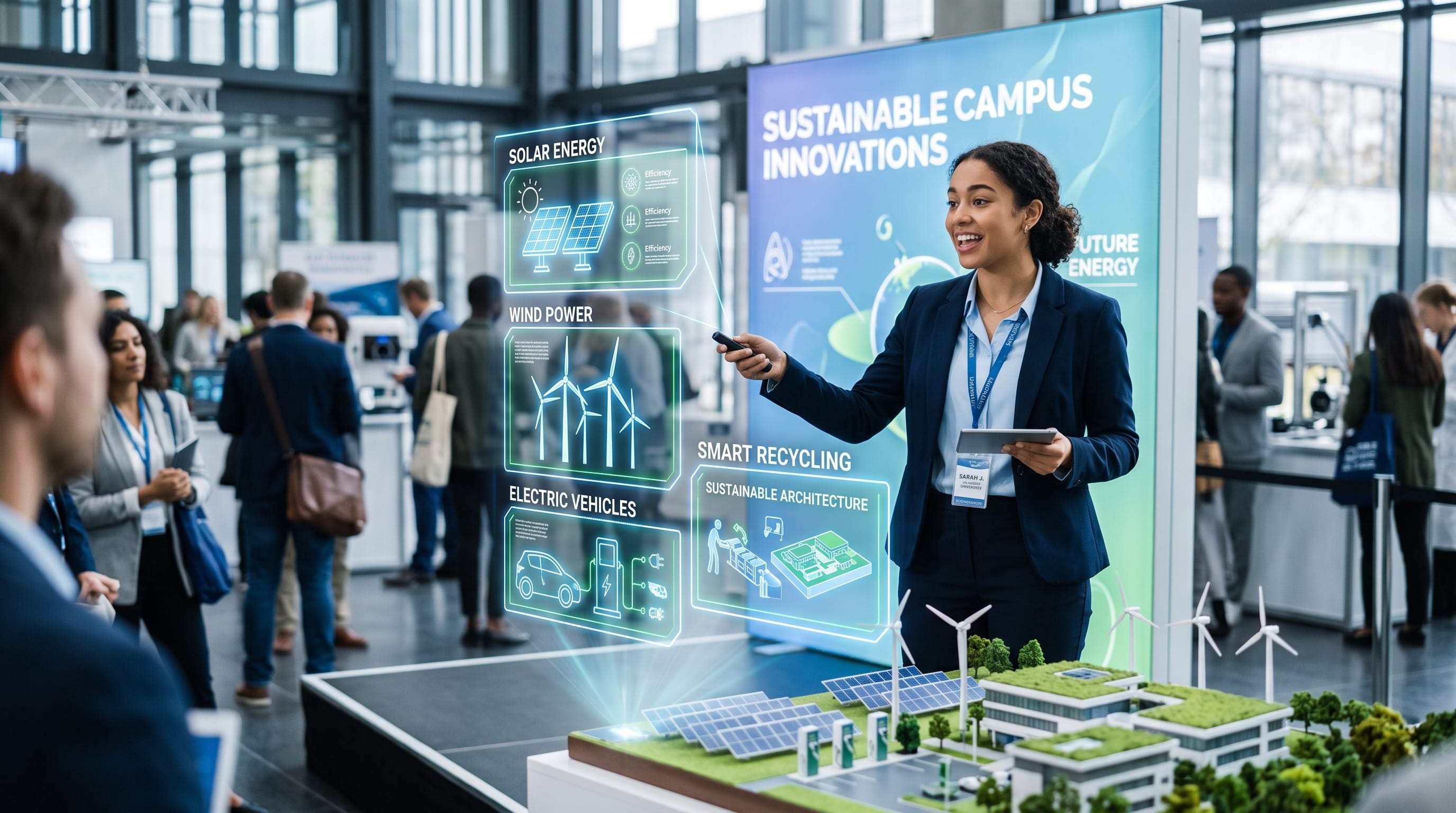
Clean technology ideas give students an opportunity to explore how science, engineering, and creative problem-solving can address environmental challenges. From testing small solar panels to designing systems that reduce water waste, clean technology research connects classroom knowledge with practical solutions that can benefit homes, schools, and communities.
Clean technology, sometimes called cleantech, includes products, systems, and processes that reduce environmental damage, use natural resources more efficiently, or replace polluting technologies with cleaner alternatives. Research topics may involve renewable energy, energy efficiency, sustainable transportation, recycling, water conservation, green construction, or pollution prevention.
Interest in these subjects continues to grow as governments, universities, and businesses invest in cleaner energy systems. The International Energy Agency reports that renewable power capacity is expected to expand significantly through 2030, making clean energy research an increasingly relevant field for students.
The following clean technology ideas can be adapted for middle school, high school, or university research. Some can become physical experiments, while others are better suited to surveys, data analysis, prototypes, or comparative studies.
Why Clean Technology Ideas Matter for Students
Researching sustainable technology helps students understand that environmental problems are also design and engineering problems. A student does not need to invent an entirely new energy system to produce meaningful research. Even a small experiment can reveal how materials, climate, human behavior, and cost affect a technology’s performance.
Student research can also develop useful skills such as:
- Forming a clear hypothesis
- Collecting and interpreting data
- Building simple prototypes
- Comparing environmental impacts
- Measuring efficiency
- Presenting technical findings
- Evaluating cost and practicality
- Working collaboratively
Clean-energy competitions and educational programs already encourage students to develop community-focused solutions. NREL has supported collegiate programs that connect student teams with technical experts, clean-energy organizations, and practical demonstration opportunities.
1. Solar Panel Efficiency Research
Solar power is one of the most accessible clean technology ideas for student projects. Solar photovoltaic panels convert sunlight into electricity, while solar thermal systems capture heat for practical use.
Students can investigate how different conditions affect a small solar panel’s output.
Possible research questions include:
- How does panel angle affect electricity generation?
- Does dust reduce solar-panel performance?
- Which direction produces the highest output?
- How does shade affect voltage and current?
- Do reflective surfaces improve solar collection?
- How does panel temperature influence performance?
A basic experiment can use a small photovoltaic panel, multimeter, adjustable stand, and light source. Students should record measurements at consistent time intervals and control as many variables as possible.
Clean Technology Ideas for Solar Tracking
A more advanced project could compare a fixed solar panel with a panel that follows the sun. Students could build a simple tracking mechanism using light sensors and a small motor.
The project should compare the additional electricity produced with the energy used by the tracking mechanism. This makes the research more realistic because an efficient design must produce more value than it consumes.
2. Small Wind Turbine Blade Design
Wind-energy research allows students to explore aerodynamics, electricity generation, and mechanical design. A project can compare several turbine blade shapes made from cardboard, plastic, wood, or recycled material.
Variables may include:
- Number of blades
- Blade length
- Blade angle
- Rotor diameter
- Wind speed
- Material weight
- Distance from the fan
Students can connect a small motor to the turbine and use a multimeter to measure electrical output. The goal is not simply to create the fastest-spinning turbine. The stronger study identifies which design generates the most usable electricity under controlled conditions.
This is one of the most effective clean technology ideas for combining physics with environmental research.
3. Energy-Efficient Classroom Study
Students can evaluate how much electricity their classroom or school uses and identify realistic ways to reduce it.
The research may examine:
- Lighting
- Air conditioning
- Computers and monitors
- Projectors
- Fans
- Charging devices
- Standby power
- Natural daylight
Students can conduct an energy audit by recording how many devices are used, their estimated wattage, and their operating time. They can then calculate potential savings from switching to efficient lighting, changing schedules, improving ventilation, or turning equipment off when it is not needed.
A strong project should compare environmental benefits with cost. For example, replacing an older light bulb may require an initial investment but reduce electricity use over time.
4. Smart Lighting System Prototype
Smart lighting systems use sensors, timers, or automated controls to reduce unnecessary electricity consumption. Students can create a prototype using a motion sensor, microcontroller, and LED light.
The system could automatically:
- Turn lights on when someone enters
- Switch lights off when a room is empty
- Reduce brightness when daylight is available
- Record how long each light remains active
- Send an alert when energy use becomes unusually high
Students can compare the smart system with a normal lighting schedule. This transforms a basic electronics project into measurable clean-technology research.
5. Rainwater Harvesting System
Rainwater harvesting is another practical research topic, especially for schools located in areas with seasonal rainfall. A system collects rain from roofs or other surfaces and stores it for non-drinking purposes such as irrigation or cleaning.
Students can calculate:
- Roof collection area
- Average rainfall
- Estimated water volume
- Storage requirements
- Potential household or school savings
- Water lost through overflow or evaporation
A small model can use a sloped surface, gutter, filter, container, and measuring cylinder.
Students should also investigate water quality. Rainwater collected from a roof may contain dust, leaves, animal waste, or other pollutants. Therefore, the project should clearly distinguish between water suitable for plants and water that would require treatment before human use.
Also Read: Robotics Technology: The Future of Intelligent Automation
6. Low-Cost Water Filtration Research
Students can build and compare simple filters using materials such as gravel, sand, cotton, activated carbon, and reusable fabric.
Possible measurements include:
- Water clarity
- Odor
- Filtration speed
- Material cost
- Filter lifespan
- Amount of sediment removed
However, students should not assume that clear water is safe to drink. A basic filter may remove visible particles without removing bacteria, viruses, dissolved chemicals, or heavy metals.
This project is best presented as research into filtration performance rather than a guarantee of drinking-water safety.
7. Greywater Reuse for Plant Irrigation
Greywater is lightly used water from sources such as sinks, showers, or laundry. Students can explore whether certain types of greywater can be reused for irrigation.
A controlled plant study might compare:
- Fresh water
- Mild soapy water
- Rinsing water
- Collected rainwater
Students can measure plant height, leaf count, soil condition, and growth over several weeks. They should use safe, mild products and avoid water containing harmful chemicals.
This is one of the more practical clean technology ideas because it combines water conservation, biology, and household behavior.
8. Green Roof Temperature Experiment
A green roof uses plants and growing material on top of a building. It can help manage stormwater, provide insulation, and reduce surface temperatures.
EPA information explains that green roofs, street trees, and similar infrastructure can shade surfaces and reduce building energy demand. Green infrastructure can also capture stormwater and help filter pollutants before they reach waterways.
Students can create two small model buildings:
- A model with a conventional roof
- A model with soil and vegetation on the roof
Place both under the same light source and measure their internal temperatures at regular intervals. Students can also test how much rainwater each roof retains.
Clean Technology Ideas Using Green Infrastructure
Students who cannot build a roof model can study other forms of green infrastructure, including:
- Rain gardens
- Permeable pavement
- Tree-covered walkways
- Vegetated drainage channels
- Planter boxes
- Urban shade systems
EPA identifies these approaches as tools for managing stormwater where it falls rather than directing all water immediately into drains.
9. Permeable Pavement Comparison
Traditional concrete and asphalt prevent rainwater from soaking naturally into the ground. Permeable pavement allows more water to pass through the surface.
Students can compare several materials, such as:
- Solid concrete
- Gravel
- Sand
- Interlocking blocks
- Soil with grass
- Permeable paving samples
Pour the same amount of water over each surface and measure runoff volume, drainage time, and water retained.
This project can help students understand flooding, erosion, urban development, and groundwater recharge. It is especially useful when connected to a local problem near the school or community.
10. Food Waste Composting Technology
Food waste can be turned into compost instead of being sent to disposal sites. Students can compare different composting methods to determine which one breaks down organic material most effectively.
Variables may include:
- Container ventilation
- Moisture level
- Food-waste size
- Brown-to-green material ratio
- Temperature
- Turning frequency
- Addition of dry leaves or paper
Students should measure decomposition speed, temperature, mass reduction, odor, and final compost quality.
A more advanced project could add a temperature or moisture sensor connected to a simple monitoring system. This combines biology with digital clean technology.
11. Plastic Waste Sorting System
Recycling often becomes difficult when different materials are mixed together. Students can design a simple system for sorting plastic waste by appearance, density, shape, or recycling code.
A basic project may use labeled containers and manual sorting. A more advanced version could use:
- A camera
- Color sensors
- Weight sensors
- A conveyor belt
- A microcontroller
- Image-recognition software
Students should evaluate accuracy, speed, cost, and error rate.
The research can also investigate whether better labels or bin designs improve how accurately people separate waste. This adds a behavioral-science element to the technology project.
Also Read: Digital Technology Trends You Need to Know Right Now
12. Biodegradable Packaging Materials
Students can experiment with biodegradable packaging made from materials such as starch, paper pulp, plant fiber, or natural binders.
Possible tests include:
- Water resistance
- Strength
- Flexibility
- Drying time
- Weight capacity
- Decomposition rate
- Production cost
A research project might compare homemade starch-based film with conventional plastic packaging. However, the analysis should consider the entire lifecycle. A material is not automatically sustainable simply because it is plant-based.
Students should ask:
- How much water is required?
- How much energy is used during production?
- Can the material be reused?
- Does it break down under normal conditions?
- Is it strong enough for its purpose?
These questions make clean technology ideas more scientifically meaningful.
13. Solar-Powered Phone Charger
A small solar charger can demonstrate how renewable electricity is collected, stored, and used.
The project may include:
- A solar panel
- Charge controller
- Rechargeable battery
- Voltage converter
- USB output
- Protective casing
Students can measure charging time under different weather conditions and compare direct solar charging with battery-assisted charging.
Electrical components must be selected carefully. Students should use low-voltage equipment and receive appropriate supervision when assembling circuits.
14. Sustainable Transportation Survey
Not every clean-technology project requires a physical prototype. Students can investigate transportation habits at their school and analyze how technology could reduce fuel consumption and emissions.
A survey may ask how people travel by:
- Private car
- Motorcycle
- School bus
- Public transport
- Bicycle
- Walking
- Carpool
- Electric vehicle
Students could then model the possible effects of carpooling, improved bus scheduling, safer bicycle parking, or route-planning applications.
The final project might include a map, emissions estimate, cost comparison, and realistic recommendations for the school.
15. Smart Irrigation System
A smart irrigation system uses moisture information to water plants only when necessary. Students can build a small version with a soil-moisture sensor, pump, water container, and microcontroller.
The research should compare:
- Manual daily watering
- Fixed-timer irrigation
- Moisture-controlled irrigation
Students can measure total water use, soil moisture, and plant growth. A successful design should save water without harming the plants.
This is one of the strongest clean technology ideas for students because it combines programming, electronics, agriculture, and water conservation.
How to Choose Clean Technology Ideas for Research
A good topic should match the student’s knowledge, available equipment, budget, and schedule. Avoid selecting a project only because it sounds advanced.
Use the following process:
- Identify an environmental problem.
- Select one measurable part of that problem.
- Write a specific research question.
- Choose one variable to change.
- Decide what data will be collected.
- Build or prepare the experiment.
- Repeat the test several times.
- Analyze the results honestly.
- Explain the limitations.
- Suggest improvements or future research.
For example, “solar energy” is too broad. A stronger research question is, “How does the angle of a small solar panel affect its electrical output between 9 a.m. and 3 p.m.?”
Tools for Clean Technology Student Research
Students do not always need expensive laboratory equipment. Depending on the project, useful tools may include:
- Digital thermometer
- Multimeter
- Light meter
- Soil-moisture sensor
- Measuring cylinder
- Kitchen scale
- Microcontroller
- Stopwatch
- Spreadsheet software
- Survey forms
- Basic data-visualization software
- Smartphone camera
The IEA also maintains a public clean-energy technology database that can help students explore technology development and compare research areas.
Always follow school safety rules, especially when working with electricity, batteries, tools, contaminated water, heat, or chemicals.
Also Read: Best Technology Trends for Brands in the Digital Era
Final Thoughts on Clean Technology Ideas
The best clean technology ideas for student research are not necessarily the most complicated. A simple project can be valuable when it asks a clear question, measures results carefully, and explains why the findings matter.
Students can investigate solar power, wind energy, water reuse, smart irrigation, sustainable packaging, recycling, green roofs, or efficient transportation. Each topic offers opportunities to connect science with real environmental challenges.
Clean technology is also becoming increasingly important within the global economy. Current energy research shows continued investment, deployment, and innovation across renewable power, energy efficiency, manufacturing, and related technologies.
By exploring clean technology ideas, students can strengthen their research skills while learning how thoughtful technology can reduce waste, conserve resources, and support healthier communities. The project may begin as a classroom assignment, but the knowledge gained can inspire future study, entrepreneurship, or a career in sustainability.

For high-quality fonts to boost your income, check out DM Letter Studio. Our professional fonts are perfect for branding, marketing, and content creation. So, don’t miss this opportunity.