
Designing Brand Identity: Tips and Tricks for Successful Business
Designing brand identity is more crucial than you think since it can affect your business sustainability. Brand identity embodies all aspects of the goal, value, and visual representation you want to share with your audience. That’s why you should carefully design your brand identity.
To find out more about this strategy, check the explanation here!
Why is Designing Brand Identity Matter?
As the face of your business, brand identity builds people’s perception or visual imagery about your business. Brand identity is the overall aspect of presenting your brand to the world, including logo, color, typography, product packaging, and marketing channel.
You can gain various benefits from building a brand identity, for example, connecting with your audience.
Also Read: 10 Recommended Sites for UI Design Patterns for Creative Projects
6 Steps in Designing Brand Identity
There are many things you should do to build a strong brand identity. Yet, you can follow the following six steps summarized. Let’s see and apply the process!
1. Plan Your Brand Core and Value
The first thing in building brand identity is knowing what your purpose is. It means you must research the fundamental things of your company. For example, you must set goals, missions, characteristics, and personalities.
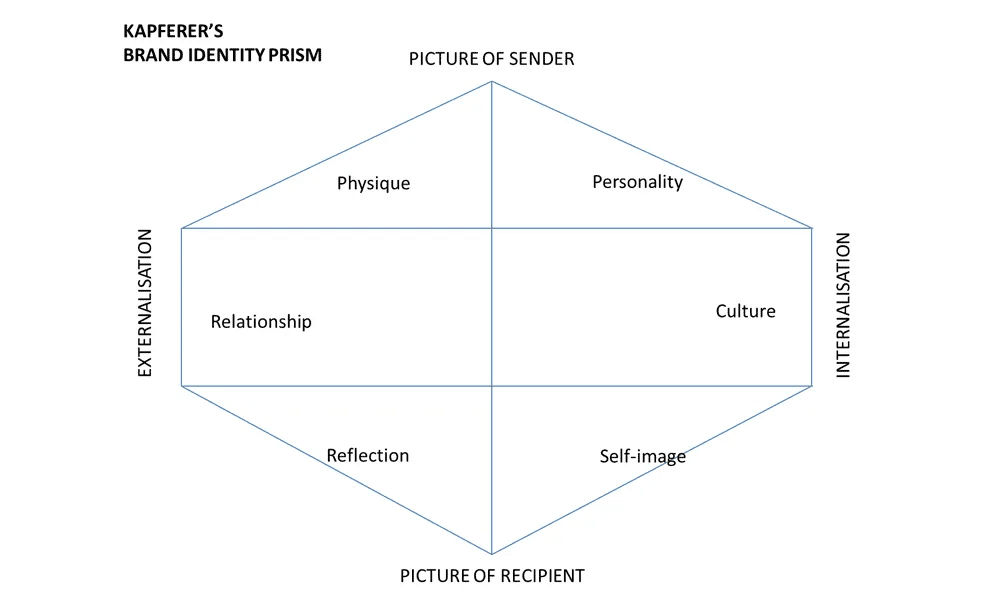
You can break your company’s characteristics down with Kapferer’s brand identity prism. This model represents six characteristics of brand identity. Correspondingly, identifying these aspects helps to plan out for further branding strategy.
a. Physique
This aspect represents the visual appearance of your company, such as logo and typography.
b. Personality
Personality portrays your brand voice or tone you use to introduce your brand.
c. Culture
This aspect refers to the work culture inside the company.
d. Relationship
Relationship means the interaction between the company and customers.
e. Reflection
This one describes how the company visualizes its ideal customers.
f. Self-image
Self-image is about how customers see themselves and how the company helps them to fulfill that image.
2. Know Your Audience and Competition
Knowing your audience is essential to building brand identity. Hence, ask yourself what the customer needs or wants from your business.
Another thing to consider is competition. What is the good point about your brand compared to other competitors?
3. Develop Proper Brand Guidelines
Designing brand identity also includes developing brand guidelines. Brand guidelines are standard about how you represent your brand to the audience. The guidelines might involve the following elements.
a. Company Information
Like the previous point, your company must contain the brand value, incorporating names, missions, goals, and ideal audience.
b. Logo
This one refers to a guide for your brand’s logo, like size, spacing, context, color, and font, that make it stand out.
c. Typography
Typography is crucial for delivering messages. Thus, you must set the typography for your brand, from type of font, spacing, and also sizes.
d. Color Palette
Color can let the audience interpret your business. It also defines the tone of your brand.
e. Imagery
Similar to selecting a color palette, selecting icons, images, or any media could define people’s perception of your brand.
f. Tone
This aspect means the atmosphere of your brand, for example, modern, classic, casual, or authoritative.
Also Read: Bad Design vs Good Design Showdown: 5 Major Differences
4. Establish Good Storytelling and Advertising
After designing brand guidelines, you will execute the plan with engaging storytelling and advertising. An engaging interaction with the audience allows you to attract them to become loyal customers.

Let’s take an example from the Nike brand identity. This company has a great marketing strategy that makes them outstanding and indelible.
Their Swoosh logo is iconic and gives a clue about their brand identity. The same goes for their slogan, “Just do it,” which hugely impacts Nike’s branding.
At this point, we can learn that Nike doesn’t just sell the product but also the brand identity. They introduce themselves with a relatable and memorable trademark to the audience. As a result, the audience feels familiar with the brand and easily becomes loyal.
5. Be Consistent
You may have a different approach to marketing your brand online and offline. However, be sure to keep consistent about your brand identity in any media for branding.
6. Monitor Your Brand
Monitoring your progress allows you to keep updated about your branding. You may use social media, analytics, or surveys to help you gather responses.
Also Read: 25 Fun and Quirky Doodle Fonts to Cheer Up Your Design!
Create a Solid Brand by Designing Brand Identity!
Designing brand identity is a challenging task. However, you can do it if you craft and follow meticulous planning. After planning, execute it by having a captivating engagement with the audience. Then, monitor the progress.
You may inspect your brandings, like color, tone, or typography, to update for a better one. As for typography, don’t take it too easy. You need to choose one that supports and complements the value and persona of your brand, mission, or goals and is relatable to your audience.
Good news for you! We have various font collections if you are looking for one. Make your brand more iconic with our remarkable fonts! Come to DM Letter Studio now and find the worthy font for your branding!
Comments are closed.